Showing posts with label TAVR. Show all posts

Thursday, August 29, 2024

Aortic Valve Disease, Blood Flow, and the Brain!

Aortic Valve Disease: Breaking through the Complexity


What is happening to me?

Perhaps there is nothing more frightening than knowing our brain is failing us.

Early this year, an intelligent, capable woman underwent extensive neurological testing. Along with some transient visual symptoms, she had increasing difficulty finding words. Stroke was ruled out. Several physicians suspected the onset of dementia. Only one neurologist said a definitive no, this is not dementia.

A few months later, in a city far from home, she could not breathe. She found herself in a very busy ER, where ultimately physicians and surgeons were challenged to save her. They did!

Today, as she recovers at home from an emergent, high risk surgery to replace her failing “TAVR in SAVR” prosthetic valve, her brain is clearly much better. 

While in retrospect there is tremendous gratitude for her “miracle” surgery and recovery, coming this close to the precipice, putting her life into the hands of physicians far from home in another city, is never by choice. Not for the person. Not for the physicians who confront the crisis. 

What could be learned from this? Were her brain symptoms an early indicator of what became an emergency originating with her aortic valve?

The following recent publication is very timely regarding the use of widely available ultrasound to aid understanding of blood flow, not just at the proximity of the aortic valve, but as it continues through the aorta to the body, and particularly up to the brain. Clicking on the title below opens the full paper.

Method of Recording Reverse and Delayed Turbulent Blood Flow in an Obese Pediatric Patient with Congenital Aortic Stenosis

I share here corresponding author John Leighton’s comment to the Bicuspid Aortic Foundation: 

“Any new loss of cognitive function in a valve patient whether a child or an adult is cause for concern.” 

At the Bicuspid Aortic Foundation we know, from our lived experience with aortic valve disease, that shared examples such as this paper’s description of one 12 year old, may often shed light on the plight of many others who need help too. 

The Bicuspid Aortic Foundation thanks the authors of this paper for their interest in and work on behalf of those with impaired heart valve function.

Piercing the mystery that clouds their lives,

shining light on their blood flow, 

Creating a Climate of Hope,

~Arlys Velebir

                     Bicuspid Aortic Foundation


Post Script

Why was surgery the only option, instead of a TAVR in TAVR in SAVR? Quite simply, the type of TAVR valve in her heart did not allow insertion of another TAVR without blocking the blood flow to her heart. Surgery was the only option for a new aortic valve. The Bicuspid Aortic Foundation is very grateful for those skilled hands that perform these complex surgeries, extending the lives of those born with bicuspid aortic valves.


Saturday, January 29, 2022

Christmas 2021, a New Year and "Lucky to Be Alive" , January 2022

Heart Friends for Over 20 Years 

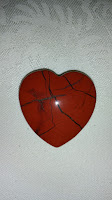
Red Jasper,
for Heart Warriors
 Everywhere!

I have known this man for something over 20 years. After my late husband's aneurysm diagnosis, he is the first person I met who had a bicuspid aortic valve and ascending aortic aneurysm. He had been told that he had both of these in his chest, and he was struggling to find expertise and help. Compared to today, 2001 was the "dark ages" in terms of even basic information about this combination, and he responded to my very first attempt to share information online.

Merry Christmas 2021

He had his surgery, and we have stayed in touch over the years since, often at Christmas. This year, in my response to his Christmas Day text greeting, I included a link to a TAVR expert whose skilled hands have saved a challenging member of my family as well as others that I know well, with valve-in-valve as well as native BAV TAVR procedures. 

My friend's surgical valve was rather ancient after 20 years, after all! His bovine pericardial aortic valve had defied the typical expectations for someone well under 60 at the time it was surgically implanted! Amazing!

January 14th, 2022

When I saw his name, I was delighted to answer the phone! I thought perhaps he was calling to chat about where he was in terms of his valve and researching his options.  

His first words shocked me, but in a good way! He was in a hospital bed - "I had TAVR this morning"!

Fast Response, Expert Hands, Success!

In the brief time since Christmas, he had contacted the TAVR expert I mentioned, sent his records, and traveled from out of state to be seen. Based on what he was hearing from physicians at the major center where he lived, he thought he might be told that he would need something done in a few months....

After having state-of-the art imaging, he was in for a major surprise! Yes, his bovine valve needed replacing, but not in weeks or months. His valve was urgent! He would have TAVR in two days

More to the Story

  • Like many I know, he did not have symptoms, at least that he recognized, that would tell him he was in trouble - that his old bovine aortic valve was badly leaking
  • In addition, he was told that he has a significant, dangerous blockage of one of his coronary arteries. He will be returning soon to have that addressed. He had never been told this! Yes, some born with bicuspid aortic valves also develop "the other" heart disease, and he is one of them....
  • He had kept detailed records of his heart history, over all these years, in a spreadsheet, and provided that when seeking this opinion. Moving from one state to another, seeing various physicians over the years - this was very important!
  • Things that were said to him locally made him uncomfortable, and moved him to seek expertise elsewhere.
  • He was able, financially and physically, to travel from another state. 

What Next?

He ended a recent message to me this way:

"What next? Lucky to be alive!!"

May his coronary artery stay open until his upcoming procedure, and may he have many more good years, made possible by very timely discovery and expert treatment of his beautiful heart (and aorta) - twenty years ago, and once again, now!

In 2022, may we continue

 to pursue our best options,

 Creating a Climate of Hope,

~ Arlys Velebir

Bicuspid Aortic Foundation


Monday, June 21, 2021

BAV Lifelong Care - Carrie Mettler's Journey - 2016 to 2021

May 2021 - Life is good!
Background - Carrie's BAV Discovered in Early 1990's

Carrie was born with BAV, but she did not know this until she volunteered to be a guinea pig for a new echocardiogram machine in the early 1990's. There it was - a two-leaflet aortic valve! The next year, after her sister's diagnosis included not just BAV but an ascending aortic aneurysm, Carrie had another echo which showed that her ascending aorta was enlarged also.  

Carrie already had begun her heart journey with the implantation of her first pacemaker in 1989, when she was only 29 years old. In the following years, her pacemaker journey alone has required multiple interventions due to infection, broken pacing leads, and device upgrades. In 2014, open heart surgery was required to address complications caused by pacemaker leads! Carrie had developed Superior Vena Cava (SVC) syndrome, which is obstruction of the blood flow though the superior vena cava. The cause was old pacemaker leads located there and scarring that had developed in this blood vessel over time. During surgery, Carrie's own pericardial tissue was used to enlarge her right atrium and patch her superior vena cava, and the abandoned pacemaker leads were removed.

Here, we focus especially on the most recent five years of Carrie's journey, from 2016 to the present. Carrie began experiencing chest pain/discomfort that year, causing her to seek out the expertise of the Cleveland Clinic. The remainder of this post are are in Carrie's voice, with paragraph captions added.

October 28, 2016 - Chest Pain Prompts a Visit to Cleveland

So off I went for evaluation at Cleveland Clinic.  I flew to Chicago where my little sister, Theresa, picked me up.  We then took an all-day road trip to Ohio.  We spent several days there.  I had an echocardiogram, a CT, labs and EKG.  Once all the tests were completed we met with a cardiologist as well as Dr. Eric Roselli, a cardiothoracic surgeon.  Dr. Roselli viewed the CT result with us, where we were able to view the actual scan.  My aorta was stable and they all felt that it was reasonable for me to continue on with the watch and wait approach.  The chest pain issue was still unsolved so I just had to back off on my running and switch to walking.

 So, over the next several years I kept up to date with my local cardiologist, where serial imaging of my aorta and bicuspid aortic valve remained relatively stable.  Chest discomfort remains unsolved.

March 2019 - Diving Competition, Bee Sting and  Breast Cancer

During a dock diving competition where my little dachshund was competing I was stung by a bee on my left wrist.  Initially the sting was painful but I continued on with the day just feeling tired.  Then I developed a large localized reaction which spread up past my elbow.  After seeing my primary care provider he instructed me that if the redness continued going up my arm that I should go to the ER.  I did end up going to the Emergency Room where I was given appropriate medications and steroids.  The “cellulitis” finally resolved.  It was also deemed that I am allergic to bee venom.

Bee sting reaction!
But something wasn’t right.  I just kept feeling like I had an ache in my left armpit area for a while…then I started feeling pain in my left breast. 

I was watching a nightly national news program one evening and they aired a segment about women with fibrous breast tissue should be screened with 3D mammography.  After seeing this and knowing my mother passed away after a battle with metastatic triple negative breast cancer…I called my PCP and asked if he would order this mammogram for me. 

 I went in for the mammogram the end of April.  The next day my doctor’s office called to tell me that I had a suspicious lesion in my left breast and that I will be scheduled for an ultrasound.   After the ultrasound my PCP called me to let me know I needed to have a biopsy. 

The biopsy was done on May 2nd.  Four days later, I got the call…You have cancer!  My knees buckled and I felt sick and so frightened.  I got my wits together and went out to where my husband was working in our yard.  It was all so surreal.  Right up there with when I found out I had a brain aneurysm.  All of the results came back, and I indeed had the same cancer that my mother had.  Triple negative breast cancer.

Cancer Surgery and Chemo

There were many appointments and consultations, then finally I had surgery to remove both breasts June 24, 2019.  I spent a few days in the hospital and had the support of my husband, Vic, my sister Theresa and several of my dearest friends.  I actually felt pretty well and was optimistic as no cancer was found in my lymph nodes and the tumor wasn’t too large.  But it was still considered a high grade tumor and I had to be scheduled for 16 weeks of chemotherapy.   Prior to this I had to have a pre-chemo echo…where everything appeared stable.

After discussing everything with my oncologist and surgeon they agreed that I could take the RV trip we planned to our favorite park on the Metolius River in Oregon.  I was very grateful for this time to reflect and be with my husband and my sister by heart, Judi and her husband Greg.  We were also joined by two more dear friends one of which was a retired nurse.  I was in good hands and I felt the trip to be restorative.  

January 2020 - Last chemo treatment
August 5th 2019     I received my first round of chemo.  Judi was with me for every infusion from then on.  I developed most of the nasty side effects.  Anemia, neutropenia, oral thrush, nausea and hair loss.  We had to postpone several treatments until my labs rebounded.  I also had to have several blood transfusions. 

I was pretty much exhausted most of the time but pushed myself to walk my dogs as much as possible.    In October I had another echo, and my cardiologist told my aortic valve was now mildly stenotic.  Fast forward to December and the aortic valve showed moderate stenosis.  I became more fatigued and short of breath and even after chemo ended in January of 2020 I still could not regain my stamina.  My cardiologist recommend that I work out but I could barely climb a flight of stairs.


 March 2020 - COVID, Fatigue, BAV Severe Stenosis, A New Door Opens!

The Covid 19 Pandemic lock down started.  I was supposed to have the tissue expanders removed and proceed with breast reconstructive surgery.  This procedure was deemed elective and my case was cancelled indefinitely.  I still felt short of breath, and fatigued along with exertional chest discomfort.  Not to mention how uncomfortable the tissue expanders were. Then in May my cardiologist ordered another echo.  My aortic valve stenosis was now severe.  I had mild swelling of my ankles and was becoming depressed and very frustrated. 

One day in August, my husband and I were driving down our road and stopped in to see our relatives that were out in their yard.  This was one of those divine intervention moments.   You see, this family member also has severe aortic stenosis!  Two of us, living on the same road, with the same problem. We talked for a while, and she told me that she had become discouraged with her local cardiologists and finally went to UC Davis in Sacramento, where she felt she receives superior attention.  I told her that I was also frustrated with my care and that my cardiologist of many years was set to retire.  I asked her to get me some contact information the next time she went.  A few days later she stopped by with the TAVR (Transcatheter Aortic Valve Replacement) Nurse coordinator’s card and said “she knows you”!  I looked at the name on the card and couldn’t believe that it was someone I used to work with in a cardiology office where I worked for many years.  She actually helped train me in pacemaker and ICD follow up….and we even had golfed together!  She was expecting my call!  I felt so relieved and thankful! 

 September 1st 2020 - BAV Needs Replacing, Stable Aorta

Carrie's aorta 
2016 at Cleveland Clinic

Judi picked me up and off we went to UC Davis, where I had another echo and was evaluated by the cardiologist specializing in TAVR. I was also evaluated by a cardiothoracic surgeon and many medical students.

They all agreed that my aortic valve needed to be replaced, but they needed more time to go over the echocardiogram results and the recent CT scan.  Because I had previous open heart surgery for SVC syndrome and also have an ascending aortic aneurysm, I was considered high risk.

I felt very comfortable and confident in my new care team, knowing they would take time to make a treatment plan. Two days later I received a call from the TAVR nurse.  They determined that I was a candidate for TAVR and that my aorta was considered stable. 


 October 5, 2020 - TAVR in Native BAV

I had a transcatheter aortic valve replacement (TAVR) using an Edwards Lifesciences Bovine valve.  Everything went very well and I felt the difference immediately!  My physicians are optimistic that with my new valve, some of the pressure will be taken off of my ascending aorta.  We will continue to monitor my prosthetic valve along with my aneurysm. 

June 2021 - Blessed in the Face of Adversity

Today, I feel very well!  I was finally able to have my breast reconstructive surgery… also at UC Davis.  In fact, I have transferred all of my care to UCD.  My care has been amazing!  Yes the past few years have been a challenge…as they have for all…but again, I would not change a thing.

Feeling blessed in the face of adversity is truly a gift…and I will always be thankful for the bee and the cow that helped save my life! 


Carrie has been with us at BAF since our beginning days,

 and it is our privilege to walk with her always. 

Thank you, Carrie,

 for once again sharing your courage and strength with the world,

and through each experience,

 Creating a Climate of Hope

~Arlys Velebir

                    Bicuspid Aortic Foundation

Also see Carrie Mettler - A Wonderful Athlete with BAV   and 

Carrie in 2016 - Seeking Opinions for a Complex Situation

Thursday, June 11, 2020

The Power of Hope and "Redo" Aortic Surgery

Introducing Joseph
It was 10 years ago. We were two voices on the phone together. We have never met in person. I have never seen his picture. None of that matters, not then and not now. What mattered was what we said to one another.

His name is Joseph. Heart surgeons refer to someone like him as a "redo".

His daughter had put us in touch. He was already a survivor of an aortic crisis, having come through aortic dissection and ascending aortic aneurysm surgery. Now his bicuspid aortic valve had become calcified and narrow. He was facing another major open-heart surgery, not so very long since the last one.

Yes, surgeons call someone like Joseph a "redo". I had heard some things about "redo's", such as the challenges of scar tissue that can make even opening up the chest safely a challenge.

An example of BAV Stenosis
This was not Joseph's valve!
How could I help Joseph? 
By this time, I had already been through enough in my own family to know about facing hard things, including more than one open-heart surgery, because of BAV and the aorta.  I also knew how much strength and ability to heal those with BAV often have. They are generally not "frail" people, and as Joseph told me about himself and how active he was, I recognized that strength in him.

He had already come face to face with death when his aorta tore. He had come through major surgery to replace part of his aorta. Now it was his stiff, calcified BAV forcing intervention. Before open heart surgery and artificial aortic valves, the end state of aortic valve stenosis was heart failure ending in death. There was no question the stenosis could not be allowed to weaken his heart and end his life, when a surgeon could help him. He already knew these things from his doctors. I must leave to them all the challenges of a "redo" surgery.

Joseph didn't need information from me. 
He didn't need any explanations either.

He needed hope.

"Am I going to make it?"
I am so glad that Joseph felt comfortable asking me this, the life-and death question that weighed heavily as he chose to have surgery again:

"Am I going to make it?" 

Across the years, I hear once again the sound of his voice as I write this.

"Yes, you are! And we will talk again!"  

And talk again, we did! 

What a moment, hearing his voice again!

 Yes!!!

There is nothing like it! 

Courage
Red Jasper
The Warrior Stone of
Strength and Courage
Fear is normal; we all have fears to face when entering a hospital and having such major surgery. Courage enables us to go forward, despite our fears, and receive the help being offered. Joseph was a very courageous man. It was my privilege to support his courage, knowing that others had come through multiple surgeries like this.

I have sometimes used the analogy of surgery being a doorway or a gate; something we go through and there is our life once again, the diseased valve or aorta that plagued us left far behind.

A decade has passed. Joseph was not a young man back then. Age in itself is not a limitation to receiving help! How beautiful to think of  him continuing forward and having the precious time since then.

Hope
Thinking about Joseph today inspires and moves me to share this experience with others. There are others facing yet another surgery because they were born with a bicuspid aortic valve; others needing hope and support of their courage today.

Perhaps I should mention that my late husband had a total of four open heart surgeries over 27 years. Four precious times when I could keep my promise to welcome him on the other side of the surgery door, as he awoke from anesthesia.

There is so much that is possible today, while we look forward to an even better future. TAVR technology has continued to improve, emerging as an option to be individually considered in cases of both native and prosthetic aortic valve stenosis. While we must continue to speak up about our needs and the things that must be improved, this hopeful "climate" surrounding us is central to the Bicuspid Aortic Foundation's mission.

Joseph and I are sharing
this especially with you,
As you bravely choose and prepare for
 another surgery,

 "Creating a Climate of Hope".
~ Arlys Velebir
                           Bicuspid Aortic Foundation


Sunday, September 8, 2019

TAD Awareness 2019 Virtual Walk with BJ - TAVR to the Rescue


BJ Sanders shares her life story
on this virtual walk,
raising awareness of valve-in-valve TAVR
As you walk along with BJ, she begins with her life at age 12. Before your walk is over, she will tell you that today she is counted among those with a valve-in-valve TAVR and a grateful, happy heart!

1966 - A hint of what is to come
At age twelve my connective tissue disorder was emerging in the form of a severe scoliosis requiring six years of orthotics and finally culminating in a surgical procedure, Harrington Rod spinal fusion to straighten my spine at age twenty three. Despite the scoliosis I led a very active and healthy lifestyle!

1976 - Emerging labile hypertension
This is sometimes associated with Bicuspid Aortic Valve (BAV).

1981-1986 - Premature deliveries of my children
Once again connective tissue issues appeared in my three pregnancies. As a result of undiagnosed and misunderstood heart issues, I was placed on long periods of mandatory bed rest. Despite the bed rest, I had three premature deliveries.

1998 – No worries!
Despite multiple connective tissue concerns I had a very full and active life free of worry.
However, at this stage in my life I developed a prolapsed uterus, urinary incontinence and a rectocele all requiring repairs.

2000 – Searching for answers
Arrhythmias and visual concerns led to two echocardiograms, which the internist said were of no concern! Due to financial/insurance concerns, I requested my own copy of my medical records and noted that my aorta appeared to have expanded between echoes. I no longer trusted my internist!

Thus I began my long arduous Bicuspid Aortic Valve (BAV) and Thoracic AscendingAortic Aneurysm (TAAA) journey.

Over a span of two plus years, I searched earnestly for accurate knowledge to lead me to a physician with medical expertise in BAV and TAAA. There were many obstacles along the way, but the stars aligned the day I met Arlys Velebir in cyberspace. This eventually led to my introduction to Dr. Sharo Raissi, MD and the subsequent formation of the Bicuspid Aortic Foundation.

2002 – Watching and waiting
I entered into the watch and wait period under Dr. Raissi’s expert care. My quest for answers and understanding of my ascending aortic aneurysm and BAV were always met and my fears melted away knowing that I had found the expertise and compassionate care for which I had longed. HOPE had overcome FEAR!

 2013 – Time for Surgery!
Thirteen years into the BAV journey brought unexpected chest pain associated with a significant size increase in my ascending aorta. Dr. Sharo Raissi performed a TAAA reconstruction, a bovine artificial aortic valve replacement due to calcification of my BAV, and closed the left atrial appendage via a clip. Closing the left atrial appendage eliminates it as a potential source of embolic stroke in the future.
When I awoke from the surgery I distinctly remember Dr. Raissi saying, “In 10-15 years when this valve needs replacing, Transcatheter Aortic Valve Replacement (TAVR) should be available in the United States!” He also explained that he put in the largest artificial aortic valve possible for me; so, I could have a future TAVR!  At that moment I was not interested in 10-15 years from then. I had truly been given a new lease on life! After all, I no longer had an ascending aortic aneurysm and I had a brand new healthy aortic valve! I felt indestructible! I believed with all of my being that my new valve would last at least 15 years +! A TAVR seemed like light years away! I didn’t even bother to ask what the acronym stood for!

What I didn’t understand was that data is beginning to reveal that a new tissue surgical aortic valve replacement has a 20% chance of failure within the first 5 years!

In the Valve-in-Valve International Data registry, 20% of patients had their surgical aortic valves replaced within the 5 years prior to the TAVR. It is a bell-shaped curve.  Some patients with transcatheter aortic valves degenerate earlier, and that is true also for those with the surgical valve -  Dr. Raj Makkar Medscape interview March 25, 2019.


2016 - The honeymoon is over so soon???
The fall of 2016 brought the beginning of the end to my honeymoon with my “new” aortic valve. My scan showed the first signs of calcification!

2017 – Just “lazy”!!
2017 revealed further immobility of the “new” valve.
I discounted my increasing fatigue, believing I was just “lazy”.
I was unable to clean my house and became short of breath when making my bed. I avoided steps whenever possible. I developed a rectal prolapse with complications requiring surgery and a subsequent surgical procedure to repair another rectocele.

 2018 – Denial can be dangerous!
2018 brought frequent episodes of angina requiring nitroglycerin, increasing SOB with simple activities, debilitating fatigue. I was in complete “DENIAL” still believing my “new” valve could not possibly be the problem. Dr. Raissi spoke to me by phone and said, “BJ, I am worried about you”. I said, “Don’t worry”. He quickly responded,” I do worry”! I finally heard his concern and boarded a plane.

Happiness after TAVR with my brave, loving husband and son!
Flying from the East Coast to LA, I began to have difficulty breathing. Once again I was in complete “DENIAL”! Once my son and I arrived in LA we walked from our hotel to the Tar Pit Museum in a heat wave! I became faint and needed assistance to sit to prevent me from falling! “DENIAL”! My breathing was so compromised that I required extra pillows during the CT scan to breathe. The CT revealed severe aortic stenosis.

Dr. Raissi called me following my CT scan, and said I should call go immediately to see a TAVR specialist, Dr. Raj Makkar, MD!
No more severe stenosis!
Sweet heart sounds after valve-in-valve TAVR

Disbelief, shock and denial continued in my head… I requested that I visit Dr. Raissi first. He firmly said, “BJ you need an immediate AVR and surgery is too risky with your co-morbitities. Go to Dr. Makkar’s office at Cedar Sinai.” Mercifully, Dr. Makkar was in town and not traveling, and I was given priority and worked into their extremely busy schedule.

07-11-2018 – From grieving over one valve to welcoming another
After extensive testing, insurance approval and TAVR education, reality finally started to sink into my being. To me it was no longer the loss of my “new” surgical valve. I began to sense how fortunate I was to have the stars align once again with a life-saving procedure.

 I was especially grateful for the Sentinel Cerebral Protection System that Dr. Raj Makkar utilizes to reduce stroke risk during a TAVR procedure. One study shows that Sentinel CPS captured visible embolic debris headed toward the brain in 99% of TAVR cases. Studies show more than a 60% reduction in TAVR-related strokes when Sentinel CPS was used noted by the “Society of NeuroInterventional Surgery” and “American Association of Neurological Surgeons”.

I can breathe!
07-13-2018 – After valve-in-valve TAVR “I can breathe….!”

7:00 a.m.-TAVR procedure with the expert hands of Dr. Raj Makkar and his amazing staff!

10:00 a.m.- I awoke to my family and Arlys Velebir by my side!

My first words were, “ I can breathe lying flat!”

07-14-2018 – Out of the hospital 30 hours later!
I was discharged approximately 30 hours from my TAVR once again feeling as if I had a new lease on life!!! I was at the right place at the right time and my stars aligned…truly a miracle!

09-08-2019 – BJ today - Very grateful!!
I become more GRATEFUL each day I have to live. I no longer focus on how long my valve will last or “what ifs”.
BJ (with Dr Makkar)
after TAVR
Happy heart, happy life!!!

As I continue to discover new ways to care for my body, I am finding improved health, vigor and contentment. I no longer eat processed foods and am limiting my carbohydrates which have resulted in a 35 pound weight loss. I was an insulin dependent and insulin resistant diabetic prior to making these changes. I no longer need insulin after 17 years!

I try to live each day by the words Dr. Makkar blessed me with upon my discharge. 
He was very encouraging …
He gifted me with these words….
"Go and Live!…Go to the Beach!…
Travel!…Have Fun!…Live your Life!...
Happy Life!…Happy Heart!!!”

From one BAVer/TAD to another:

Unlike me,
please  be prompt to share your symptoms
 with your trusted physician
 or confidant
 and
 resist the temptation of DENIAL….

May your stars align on your BAV or TAD journey,
 all the days of your life!
BJ Sanders